

Introduction
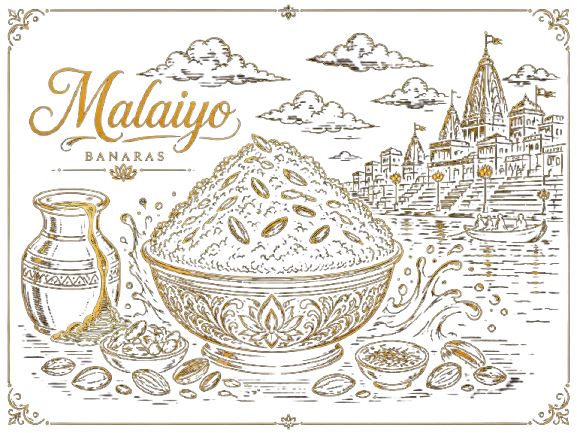
Varanasi, the city of ancient temples and vibrant spiritual traditions, also holds a unique culinary treasure: Malaiyo. This ethereal dessert, enjoyed only during the winter months, holds a special place in the hearts of locals and visitors alike.
A Delicate Creation
Malaiyo translates to "cream" in Hindi, aptly describing its key ingredient. Unlike its richer cousin, Rabdi, Malaiyo has a lighter, airier texture, closer to whipped cream — the result of a meticulous process that leans heavily on the natural elements.
The Art of Making Malaiyo
- The dance of dew: Preparation begins the evening before, with full-cream milk boiled in large open vessels. Left overnight under the open sky, the cool winter dew settles on the milk's surface — a step believed to give Malaiyo its characteristic frothiness.
- Dawn of churning: Early the next morning, skilled hands churn the milk with a traditional wooden churner for several hours, working it into a light, fluffy foam.
- A touch of sweetness: Once the texture is right, sugar is added to taste along with cardamom powder and saffron for warmth and aroma.
- Garnishing for elegance: Malaiyo is served in small earthenware cups, often finished with chopped pistachios and almonds for visual appeal and texture.
Left overnight under the open sky, the cool winter dew settles on the milk’s surface.
A Seasonal Delight
The delicacy of the process makes Malaiyo a strictly seasonal treat, available only from November to March. Its reliance on natural dew and its time-consuming, manual preparation keep it limited — and all the more cherished by those who catch it in season.
A Cultural Experience
Savouring Malaiyo is more than a culinary moment; it's a window into Varanasi's cultural heritage and the resourcefulness of its people — a flavour drawn directly from local tradition and a skilful interplay with nature's elements.
A Bite of History
Malaiyo's exact origins remain unclear, though its presence in Varanasi goes back generations. Some trace it to the Mughal era, others to Maratha influence. Whatever its beginning, Malaiyo has become an inseparable part of Varanasi's culinary landscape.
Where to Find It
Malaiyo is available throughout Varanasi during winter, but a few spots are especially known for it:
- Markandey Ki Malaiyo, Chaukhamba Gali — opposite Gopal Ji Mandir, known for authentic, traditionally prepared Malaiyo; seating can be limited and it gets crowded during peak hours.
- Shreeji Sweets & Milk, Chaukhamba — in Garwasi Tola, a well-known name for traditional sweets and snacks, and a must-visit for Malaiyo.
- Pehlwan Lassi, Lanka — at Ravidas Chauraha on Lanka Road, serving hand-whipped Lassi and Malaiyo in kulhads in its traditional style since 1950.
Pro-tip: arrive early — this delicacy often sells out quickly.